
Antarctica Cruise vs Expedition Cruise: What's the Difference?
Search for an Antarctica cruise and you will find two quite different kinds of trip sold under similar names. One is a large cruise ship that sails past the Antarctic Peninsula without anyone going ashore. The other is an expedition voyage where getting off the ship, into Zodiacs and onto the continent is the whole point. Prices, itineraries and experiences differ enormously between them.
This guide explains the difference between a cruise-only Antarctica trip and an expedition cruise, what each involves day to day, and how to tell which one you are looking at before you book.
The short answer
On a cruise-only voyage you see Antarctica from the deck. On an expedition cruise you go ashore, travel by Zodiac among the ice, and are guided by a team of naturalists and polar specialists.
The distinction isn't just marketing. The International Association of Antarctica Tour Operators (IAATO), the industry body that sets standards for its members, classifies ships carrying more than 500 passengers as cruise-only: they do not make landings (IAATO). Ships carrying 500 or fewer can land guests at approved sites, with strict limits on how many people can be ashore at once.
What is a cruise-only Antarctica voyage?
Cruise-only voyages are usually run by large ocean cruise ships, often as part of a longer South America itinerary. The ship sails through Antarctic waters for a few days, typically around the Antarctic Peninsula, while guests watch the scenery and wildlife from the decks and public areas.
What to expect:
No landings. Guests do not set foot on the continent or its islands.
No Zodiac excursions. All viewing is from the ship.
Shorter time in Antarctic waters. Antarctica is often one section of a longer voyage rather than the focus.
Conventional cruise facilities. Large ships usually have more restaurants, entertainment and onboard amenities.
For some travellers this is the right choice, particularly those who want to see Antarctica without physical activity, or who are combining it with ports in Argentina, Chile, Uruguay or the Falkland Islands. The trade-off is distance. You will see icebergs and glaciers, and may see whales and penguins, but you will not stand among them.
What is an expedition cruise?
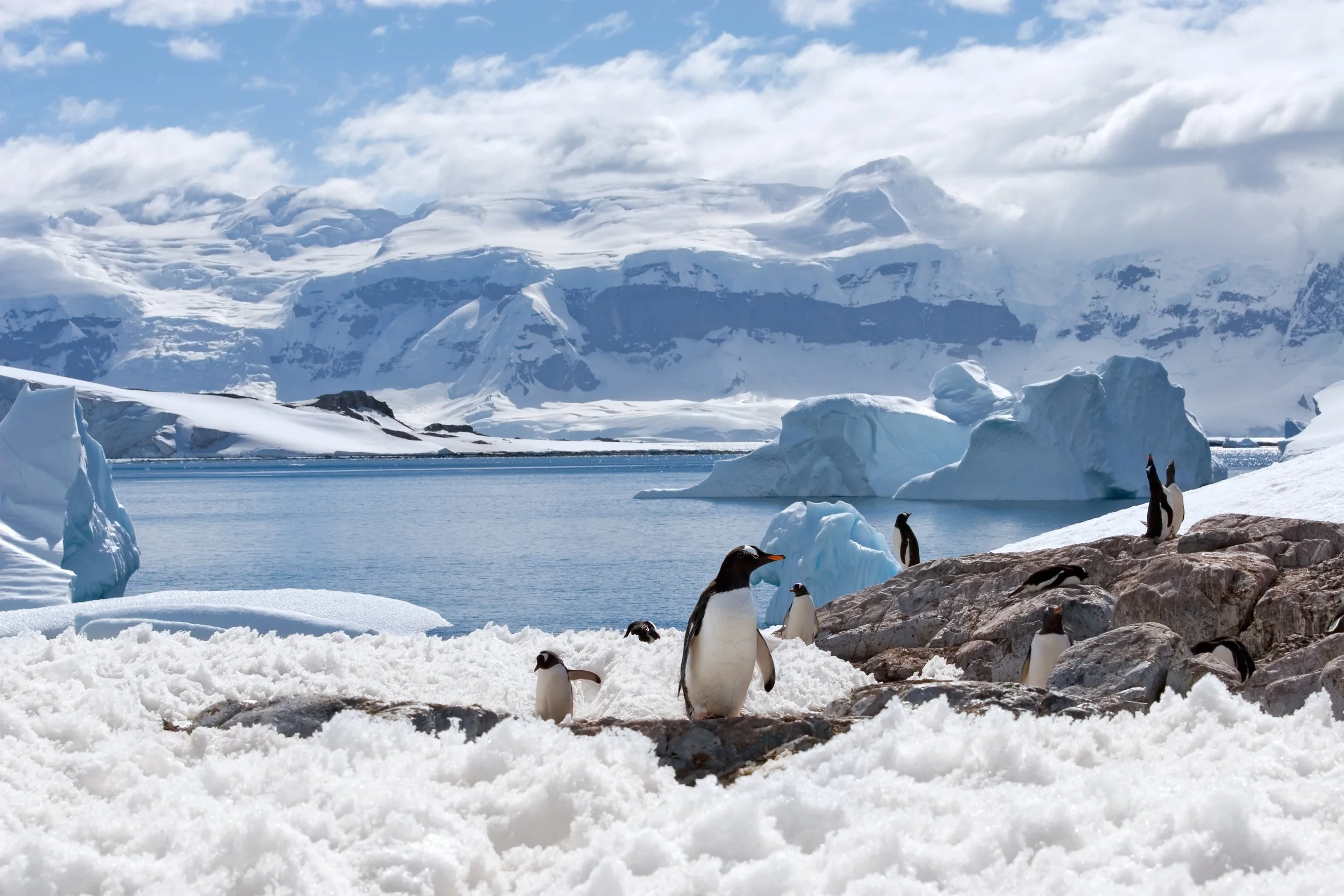
IAATO describes expedition cruising as cruising coupled with education as a major theme. In practice, an expedition cruise is built around getting guests off the ship whenever conditions allow.
A typical day in Antarctica on an expedition voyage might include:
A morning landing at a penguin colony, historic site or viewpoint, reached by Zodiac
An afternoon Zodiac cruise among icebergs, looking for seals and whales
Activities such as kayaking, snowshoeing or, on some voyages, camping overnight on the ice
A recap and briefing in the evening, with talks from the expedition team
Zodiacs are rigid inflatable boats that carry small groups between the ship and shore. They are what make landings possible in a place with no docks or piers.
Expedition ships are smaller and generally ice-strengthened. Most carry somewhere between around 100 and 200 guests, though some carry more. An expedition team of guides, naturalists, historians and specialists leads every landing and gives lectures on board.
Antarctica cruise vs expedition cruise: key differences
Going ashore
This is the biggest difference. Expedition guests make landings, subject to weather and ice. Cruise-only guests don't. If standing on the Antarctic continent matters to you, only an expedition voyage can offer it.
Ship size and how often you get off
Even among ships that land, size changes the experience. Under IAATO guidelines, no more than 100 passengers can be ashore at a site at one time, so larger expedition ships rotate guests through landings in groups (IAATO). On a smaller ship, more guests can go ashore together, with more flexibility over timing. We explore this further in when an expedition ship is really a cruise ship.
The people on board
Large cruise ships carry entertainers, hospitality teams and some lecturers. Expedition ships carry a dedicated expedition team who drive the Zodiacs, guide ashore and explain what you are seeing, from ice formation to penguin behaviour to the history of early exploration.
Flexibility
A cruise-only ship generally follows a set route past set scenery. An expedition itinerary is a plan, not a timetable. The captain and expedition leader adjust the route each day to weather, ice and wildlife, which means you may visit places that weren't on the original plan, and occasionally miss ones that were.
Activity level
Expedition cruising involves some physical effort: climbing in and out of Zodiacs, walking on snow and uneven ground, and wearing cold-weather gear. You don't need to be an athlete, but you do need reasonable mobility. Cruise-only voyages require very little.
Price and value
Cruise-only voyages can have lower per-day prices because the costs of landings, Zodiacs, expedition staff and ice-strengthened ships are spread across many more passengers. Expedition cruises cost more per day but include far more of Antarctica itself. When comparing, look at what each fare includes, not just the headline price. Our guide to what's included in an Antarctica cruise covers the line items to check.
How to tell which one you are booking
The word "expedition" is used loosely. These questions cut through it:
How many passengers does the ship carry? More than 500 means no landings.
How many landings and Zodiac outings are planned? An expedition itinerary should describe them.
How many guests go ashore at once? This tells you whether you will be rotating with other groups.
Who is on the expedition team? Look for named guides, naturalists and specialists, and how many there are.
Are activities such as kayaking included or extra?
How many days are actually spent in Antarctica? Separate these from sea days and days spent elsewhere.
Which is right for you?
A cruise-only voyage may suit you if you want to see Antarctica's scenery in comfort, have limited mobility, or are planning a broader South America cruise with Antarctica as one highlight.
An expedition cruise is the better fit if you want to go ashore, see wildlife at close range, try activities such as kayaking, learn from specialists, and spend most of your voyage focused on Antarctica itself.
The Terra Nova Expeditions approach
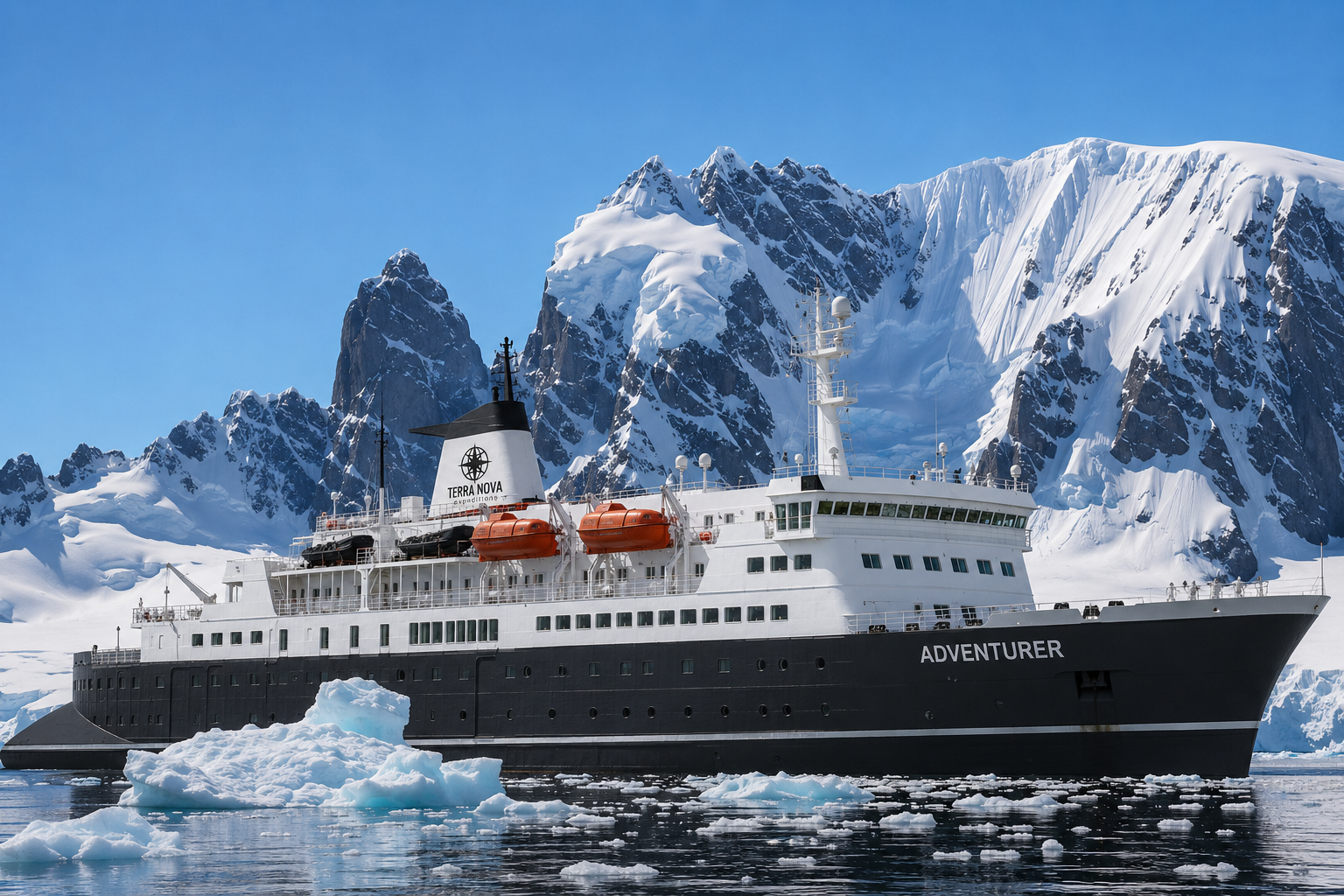
Every Terra Nova Expeditions voyage is an expedition voyage. Our Antarctic Peninsula trips sail aboard Terra Nova Adventurer, an ice-strengthened ship we carry an absoutle maximum of 127 guests that we sail with an average of 98. Each voyage carries an expedition team of 14–16 guides, naturalists and lecturers.
Landings and Zodiac cruises are included, and so are our expedition activities, including kayaking, snowshoeing and camping, all subject to weather and conditions. Our shortest Peninsula voyage, Classic Antarctica, is 10 days, with four days planned for exploring the Antarctic Peninsula.
Frequently asked questions
Can you go ashore on an Antarctica cruise?
Only on ships carrying 500 or fewer passengers that are operating as expedition voyages. Ships carrying more than 500 passengers are classified by IAATO as cruise-only and do not make landings.
Is an expedition cruise suitable for first-time cruisers?
Yes. Many expedition guests have never cruised before. Expedition ships are smaller and less formal, and the expedition team briefs you on everything from Zodiac boarding to wildlife distances before each outing.
Do I need to be fit for an expedition cruise?
You need reasonable mobility and general good health, but not athletic fitness. You should be comfortable stepping in and out of a Zodiac with assistance and walking on uneven or snowy ground.
How many days do you actually spend in Antarctica?
It depends on the itinerary. Voyages from Ushuaia usually spend about two days crossing the Drake Passage each way, so a 10-day voyage typically has around four to five days in Antarctic waters. Longer voyages add more time or additional destinations.
The bottom line
Cruise-only and expedition voyages both visit Antarctic waters, but only an expedition cruise takes you ashore and into the landscape. Decide how close you want to get, then check passenger numbers, landings, the expedition team and inclusions before you book.
To see what an expedition voyage looks like in practice, explore our Classic Antarctica itinerary, browse all our Antarctic expeditions, or speak with our team.
- No cost, no obligation