
What Actually Happens on an Antarctica Expedition Cruise? A Day-by-Day Guide
Most people booking their first Antarctica trip know roughly where they are going. Far fewer know what the days will actually look like. How do you get ashore? How long are you on land? What happens on the days at sea, and what happens when the weather turns?
This guide walks through a typical Antarctic Peninsula expedition cruise from Ushuaia, day by day, so you know what to expect before you go. It is based on a 10-day voyage, the shortest common format, but the rhythm is similar on longer trips.
Before you board: Ushuaia
Almost all Antarctic Peninsula voyages depart from Ushuaia, in Argentina's Tierra del Fuego. Most travellers arrive at least a day early, because flights into Ushuaia can be delayed by weather and the ship will not wait. Embarkation is usually in the afternoon; on our voyages, boarding is around 1:00–4:00pm.
Once on board you will find your cabin, collect your expedition gear and attend a compulsory safety drill. The ship then sails east along the Beagle Channel, which is sheltered water and a good chance to settle in before the open ocean.
Days 2–3: Crossing the Drake Passage
The Drake Passage separates South America from the Antarctic Peninsula. Crossing it usually takes around two days each way. Conditions vary from flat calm to rough, and nobody can predict which you will get far in advance.
These sea days are busier than people expect. A typical programme includes:
Lecture and talk program on wildlife, ice, history and photography from the expedition team
Mandatory briefings on Zodiac safety and how to behave around wildlife
Biosecurity checks, where guests clean boots and outer gear so no seeds, soil or organisms are carried ashore
Seabird watching from the deck, as albatrosses and petrels follow the ship
Somewhere on the way south you will usually see your first iceberg. If you are worried about seasickness, our guide to crossing the Drake Passage covers what to expect and how to prepare.
Days 4–7: Exploring the Antarctic Peninsula
This is the heart of the voyage. There is no fixed timetable. The captain and expedition leader decide each day's plan based on weather, sea ice and wildlife, and announce it the evening before.
A typical day in Antarctica
A good day might look like this:
Early morning: wake-up call over the ship's announcement system, often with something worth seeing from the deck.
Breakfast, then gear up in the mudroom: waterproof boots, outer layers and a life jacket.
Morning landing or Zodiac cruise. You board a Zodiac from the ship's side and head to shore or out among the ice.
Back on board for lunch while the ship repositions to a new site.
Afternoon outing: a second landing, a Zodiac cruise, or an activity such as kayaking or snowshoeing.
Evening recap, where the expedition team explains what you saw that day and outlines the plan for tomorrow.
Dinner, and in summer, long evenings of light on deck.
Many days include two outings, but not all. Wind, swell or ice can cancel a landing at short notice, and the team will look for an alternative, such as a Zodiac cruise in a more sheltered bay or a scenic passage through a channel.
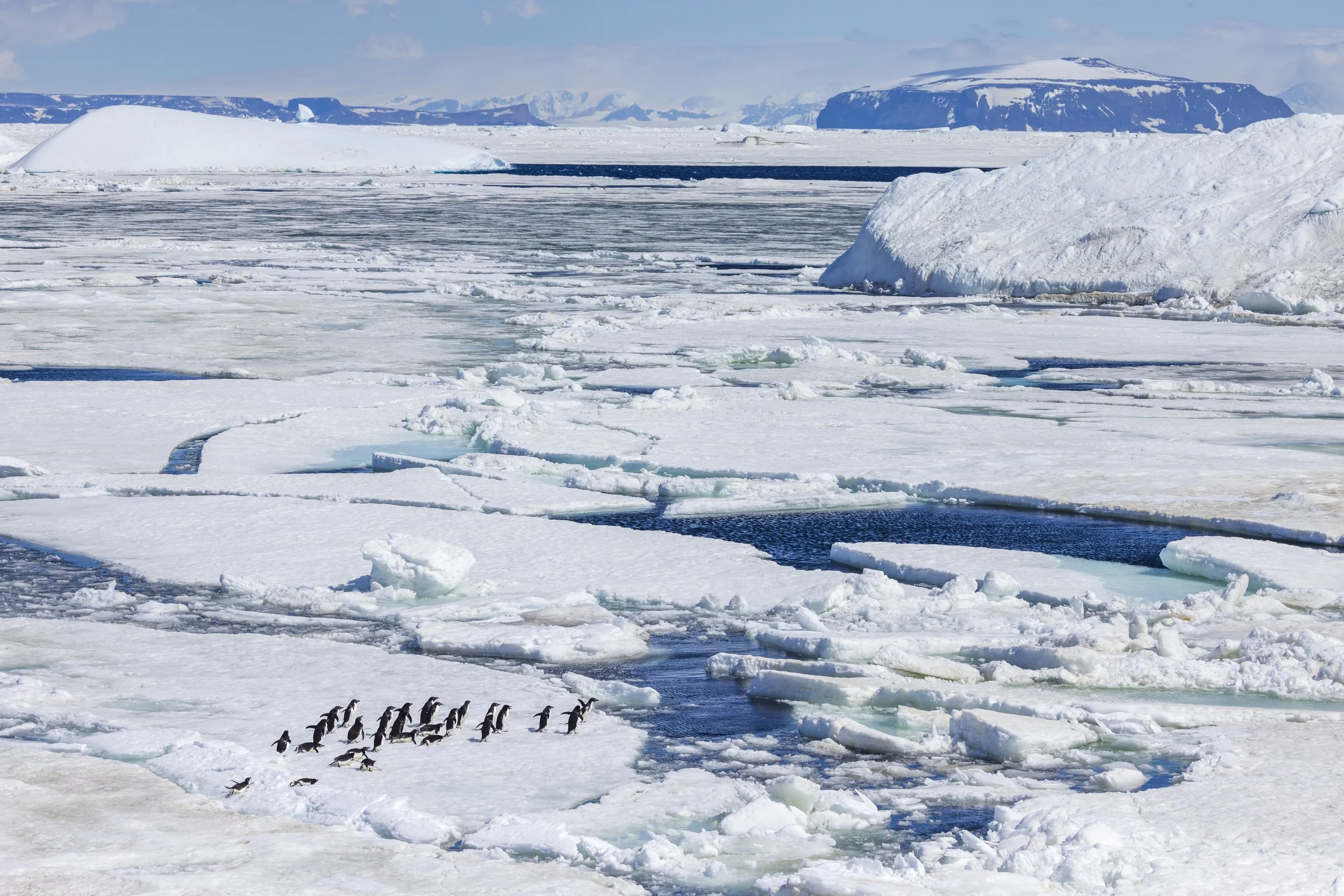
What happens on a landing
Zodiacs are rigid inflatable boats that carry small groups between the ship and shore. Guides help you on and off, and most landings are "wet", meaning you step into shallow water at the shoreline, which is why waterproof boots matter.
Ashore, guides mark out routes and viewpoints. You can walk at your own pace within those areas, photograph penguins and seals, and take in the landscape. Rules set under the Antarctic Treaty system and IAATO, the industry body for Antarctic tour operators, apply on every landing. Visitors must stay at least five metres from wildlife, must not eat or use a toilet ashore, and must clean boots and equipment before and after each visit (IAATO).
Landings commonly last from one to a few hours, depending on the site, the weather and how many guests the ship carries. IAATO limits the number of passengers ashore at one site at any time to 100, so on larger ships guests often take turns.
What happens on a Zodiac cruise
When landing isn't possible or isn't the best option, the team takes guests out on Zodiac cruises instead. These can be some of the best wildlife experiences of the trip: weaving between icebergs, watching seals on floes, or waiting quietly while humpback whales feed nearby. Wildlife is never guaranteed, but Zodiac cruises let the team follow it.
Activities
Depending on the operator and voyage, you may also be able to kayak among the ice, snowshoe or hike up a ridge, join a photography session, or camp overnight on the ice. Some operators charge extra for these; others include them. Our guide to what's included in an Antarctica cruise explains what to check.
Day 8: Final landings
Many itineraries include a last landing before the ship turns north. On our Classic Antarctica voyage, this is planned at a site such as Brown Bluff or Paulet Island, conditions permitting.
Day 9: The Drake Passage northbound
The return crossing has its own programme: final lectures, a chance to sort and back up photographs, seabird watching and, often, a farewell dinner. Many guests find this crossing a useful time to take in what they have seen.
Day 10: Ushuaia
The ship arrives back in Ushuaia early in the morning and guests disembark after breakfast. On our voyages, disembarkation is typically between 8:00 and 8:30am, and an airport transfer is offered for guests flying out that day. Avoid booking an early flight home, as Drake Passage conditions can occasionally affect the ship's arrival.
How weather changes the plan
Every expedition itinerary is a guideline. Weather and ice decide what is possible, and safety always comes first. In practice this means:
A planned landing may be replaced by a Zodiac cruise or a different site
The order of sites can change from what was advertised
Occasionally, a whole morning or afternoon may be spent on board waiting for conditions to improve
Strong weather in the Drake Passage can slow the crossing and shorten time in Antarctica
Good expedition teams adapt quickly and keep guests informed. Going in with flexible expectations makes a real difference to how you experience the trip.
Life on board
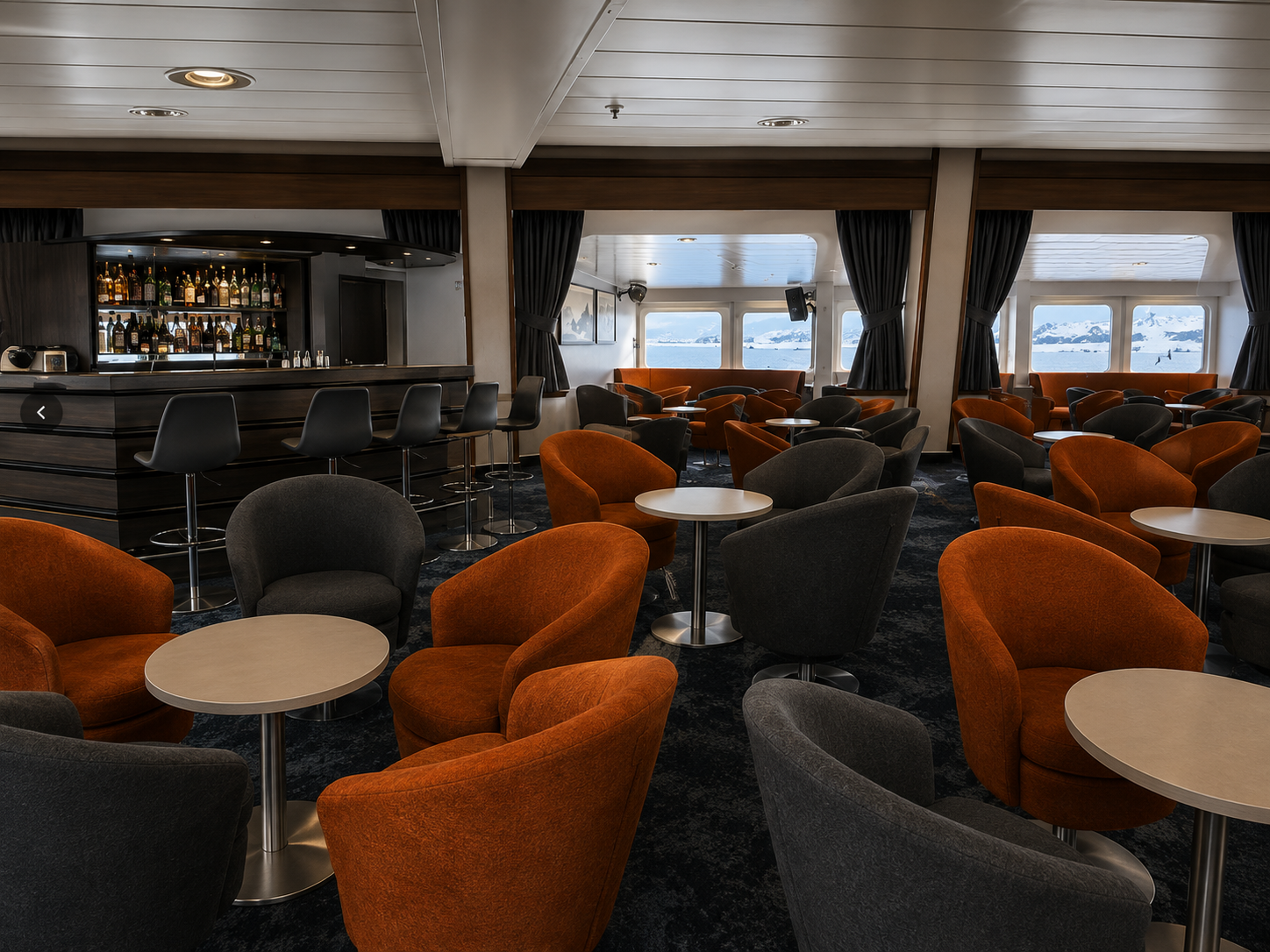
Expedition ships are comfortable but informal. There is no dress code, meals are relaxed, and much of the social life happens in the lounge, at the bar, on deck and at the evening recap. On a smaller ship you will get to know the expedition team and other guests quickly, which many people say is one of the best parts of the trip.
How this works on a Terra Nova Expeditions voyage
Our Classic Antarctica voyage follows the 10-day pattern above, with four days planned for exploring the Antarctic Peninsula. Spirit of Terra Nova adds an extra day in Antarctica for more time ashore.
Both sail aboard Terra Nova Adventurer, which we operate with an average of 98 guests and an expedition team of 12–14. We aim for two landings a day in the South Shetland Islands and along the Peninsula, though no itinerary is guaranteed. The ship has a heated mudroom for getting in and out of gear and a lecture lounge for talks and recaps. Kayaking, snowshoeing, camping, trekking, yoga, the photography programme and the polar plunge are included in the fare, all subject to weather and conditions. Kayaking needs to be pre-booked and camping is limited to 30 guests per departure. See our activities page for details.
Frequently asked questions
How many landings will I make in Antarctica?
It depends on weather, ice and the itinerary. On a good voyage you may have one or two outings on most days in Antarctica, but no operator can guarantee a set number of landings.
How long do you spend on land?
Typically between one and a few hours per landing. On smaller ships, more guests can be ashore together, which usually means more flexibility over time on land.
What should I wear on a landing?
Waterproof boots, waterproof outer layers, warm mid-layers, gloves and a hat. You will also wear a life jacket in the Zodiac. Expedition operators often provide boots and a parka.
Is there anything to do on bad-weather days?
Yes. The expedition team runs lectures, workshops and briefings, and the ship often repositions to look for more sheltered conditions or scenic cruising.
The bottom line
An Antarctica expedition cruise is shaped by the conditions, not the clock. Expect busy sea days, flexible plans, one or two outings on most days in Antarctica, and an expedition team making decisions around weather, ice and wildlife.
To see how this looks on a real itinerary, explore our Classic Antarctica expedition or ask our team about upcoming departures.
- No cost, no obligation